Tomb of Jahangir and Asif Khan in Shahdara: A Legacy in Stone and Garden
Nestled on the northern bank of the Ravi River in Lahore, the tombs of Emperor Jahangir and his brother-in-law Asif Khan form the heart of Shahdara Bagh, a historic Mughal necropolis. These 17th-century monuments stand as masterpieces of funerary architecture, representing a critical transition in Mughal artistic expression. More than just royal graves, they are profound statements on mortality, power, and the Mughal quest for paradise on earth, perfectly integrating architecture with the Persian-inspired charbagh garden layout. This guide explores their history, architectural brilliance, and provides practical advice for visitors seeking to connect with this serene chapter of Lahore’s past.
Historical Context: Patronage and Legacy
The Tomb of Jahangir was commissioned by his son and successor, Emperor Shah Jahan, following Jahangir’s death in 1627. Construction was completed around 1637, a decade into Shah Jahan’s own reign, which would become synonymous with architectural wonders like the Taj Mahal. Jahangir’s mausoleum is unique among Mughal imperial tombs; it breaks from the tradition of a towering central dome, opting instead for a more horizontal emphasis that blends seamlessly with its garden setting. This design choice is often interpreted as a reflection of Jahangir’s own persona—a ruler more inclined toward art, nature, and philosophy than overt militaristic displays.
Adjacent lies the Tomb of Asif Khan, the powerful Wazir (prime minister) of the empire and brother to Empress Nur Jahan, Jahangir’s most influential wife. Asif Khan died in 1641, and his tomb, built by his son, stands as a testament to the immense wealth and status of the nobility during the Mughal zenith. Together with the nearby, albeit ruined, tomb of Nur Jahan herself, these structures created a family necropolis, showcasing the intricate web of kinship and power that defined the Mughal court.
The site’s history mirrors the fortunes of the empire itself. It suffered neglect after the Mughal decline, was repurposed during the Sikh era, and saw damage during subsequent conflicts. In the modern period, concerted efforts by the Archaeology Department of Pakistan and heritage organizations have focused on stabilizing the delicate frescoes, restoring the water channels, and preserving these sites as priceless national treasures, ensuring their stories endure.
Architectural Brilliance: A Study in Mughal Aesthetics
The architectural language of Shahdara’s tombs represents the mature, refined style of early 17th-century Mughal craft. While different in scale, both structures share a commitment to symmetry, intricate surface decoration, and harmonious proportions.
Tomb of Jahangir: The mausoleum is set within a vast, walled garden. The tomb itself is a single-story, square structure with deep arched recesses on each facade. Its most distinctive feature is the absence of a massive central dome; instead, it is crowned with a modest dome and features four tall, elegant minarets at each corner—a clear precursor to the minaret design Shah Jahan would later perfect at the Taj Mahal. The exterior is clad in red sandstone with delicate marble inlay (pietra dura), creating geometric and floral patterns. The true treasure, however, lies inside: the interior walls and ceiling are adorned with some of the most exquisite fresco paintings from the Mughal period. These lime-based paintings depict floral scrolls, cypress trees, and intricate geometric designs in vibrant, though now faded, colors, creating a celestial canopy over the cenotaph.
Tomb of Asif Khan: Asif Khan’s tomb presents a more traditional, octagonal plan topped by a prominent white marble dome. While larger in its dome profile than Jahangir’s, it follows a classic Mughal tomb typology. Its exterior utilizes a striking contrast of red sandstone and white marble, with extensive marble inlay work. The interior, though plundered over time, still reveals the grandeur of its original decorative scheme, with remnants of frescoes and detailed stucco work. The structure is a powerful statement of a nobleman’s status, deliberately designed to be impressive yet subordinate to the imperial tomb nearby.
The Charbagh Garden: Symbolism and Design
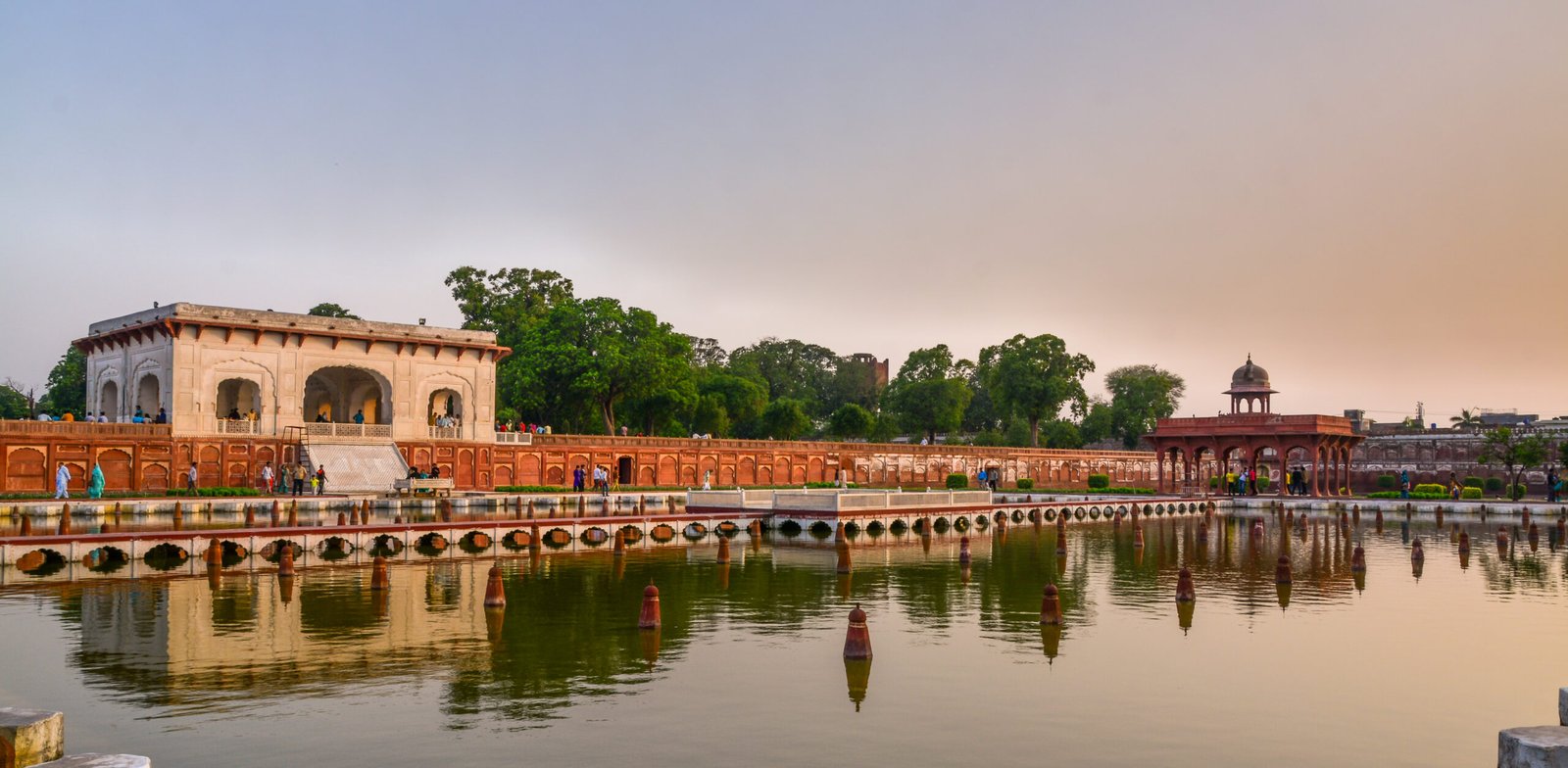
The tombs are not standalone structures but are integral components of a charbagh (four-part garden). This Persian paradise garden design was fundamental to Mughal landscaping, symbolizing the Quranic description of paradise with its four flowing rivers. The garden is divided into four precise quadrants by walkways and, crucially, water channels that once carried water from the Ravi River.
These channels were not merely decorative; they served a profound aesthetic and symbolic purpose. They created reflective surfaces that mirrored the architecture, multiplying its beauty. The axial layout choreographed the visitor’s experience: one would approach through a grand gateway, follow the central water channel, and be led on a visual journey toward the eternal rest of the emperor or noble. While some channels are dry today, restoration projects aim to revive this hydraulic system, key to understanding the intended spatial and sensory experience of serenity and ordered beauty.
A Practical Guide for the Modern Visitor
Planning Your Visit: The ideal time to visit is during Lahore’s cooler months, from October to March. Aim for an early morning arrival (around 8:00 AM). The soft, angled light of the morning sun dramatically highlights the texture of the stonework and frescoes, providing perfect conditions for photography while avoiding the heat and larger crowds of midday. The complex is generally open year-round, but it’s wise to check for any unexpected closures due to conservation work.
Getting There: Shahdara Bagh is located across the Ravi River from the main city of Lahore.
From Lahore City Centre: Approximately 8-12 km, a 20-30 minute drive via Shahdara Road.
From Allama Iqbal International Airport: About 20-25 km, a 40-50 minute journey depending on traffic.
Transport: Taxis and ride-hailing services are the most convenient options. You can get dropped at Shahdara market, from which the tomb complex is a short walk.
Photography Tips: Photography is permitted and encouraged, but flash must be avoided to protect the fragile centuries-old pigments.
Capture the Symmetry: Use a wide-angle lens to frame the tombs along their central axes. Position yourself to use the garden pathways and water channels as leading lines.
Detail is Key: Bring a macro or prime lens (50-85mm) to capture the intricate details of the marble inlay (pietra dura), fresco patterns, and lattice screens (jali).
Work with the Light: The golden hours after sunrise and before sunset provide warm, soft light that adds depth and reduces harsh shadows on the facades.
Suggested Half-Day Itinerary:
8:00 – 8:30 AM: Arrive, purchase tickets, and orient yourself at the entrance.
8:30 – 9:45 AM: Explore the Tomb of Jahangir. Walk the perimeter, study the minarets, and spend time inside appreciating the frescoes.
9:45 – 10:15 AM: Walk through the charbagh gardens to the Tomb of Asif Khan, noting the axial planning.
10:15 – 10:45 AM: Examine Asif Khan’s tomb and its decorative elements.
10:45 AM onward: If time permits, visit the nearby, albeit less preserved, tomb of Empress Nur Jahan to complete the family narrative.
Frequently Asked Questions (FAQs)
Why is Jahangir’s tomb architecturally significant? It represents a unique departure in imperial Mughal tombs with its low horizontal profile and corner minarets, emphasizing garden integration over vertical dominance. Its interior frescoes are among the finest surviving examples from the era.
How much time should I allocate? A focused visit to both main tombs and the gardens requires 1.5 to 2 hours. Allocate a half-day if you wish to include Nur Jahan’s tomb and explore at a leisurely pace.
Is it safe for tourists? Yes, the site is a government-managed heritage location and is generally safe. As with any tourist spot, it’s advisable to keep personal belongings secure.
What should I wear? While there is no strict dress code, modest clothing is recommended as a sign of respect at a historical mausoleum.
Conclusion: An Enduring Monument to an Empire’s Soul
The tombs of Jahangir and Asif Khan in Shahdara are more than stops on a tourist itinerary. They are serene open-air museums that offer a tangible connection to the worldview of the Mughals—a culture that saw no divide between art, architecture, nature, and spirituality. In their quiet, garden-bound grandeur, they speak of an aesthetic that sought to create eternal peace and ordered beauty. For the visitor, they offer a respite from the city’s bustle and a chance to walk through a living masterpiece of landscape architecture, where history is written not just in stone, but in the very arrangement of water, pathways, and flowering trees. Their preservation is a gift to the future, ensuring that the legacy of the Mughal vision for paradise remains within reach for generations to come.